
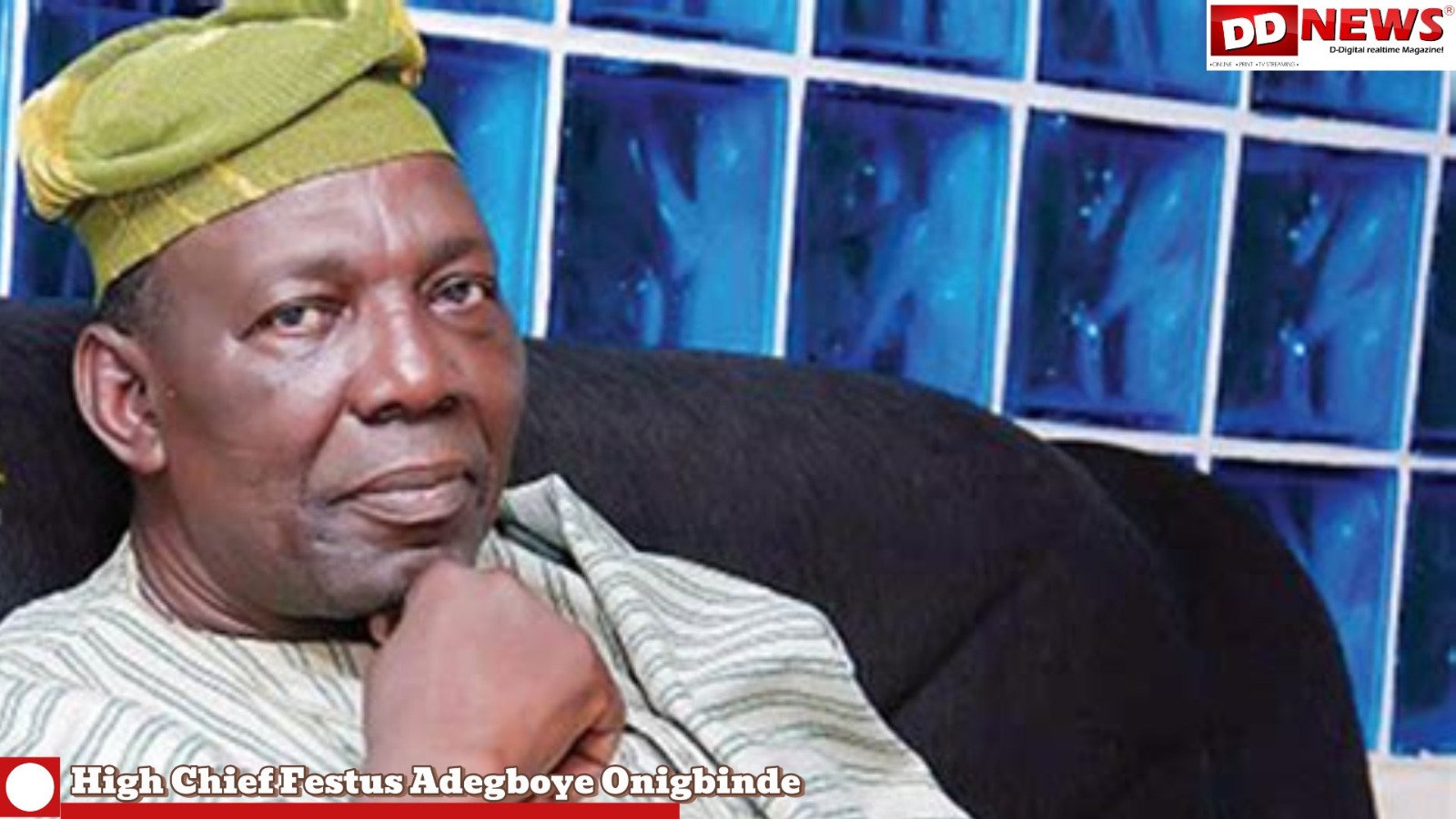
Nigerian football has been plunged into mourning once again with the passing of one of its most revered figures, High Chief Festus Adegboye Onigbinde, the first indigenous coach of the Super Eagles, who died on Monday at the Obafemi Awolowo University Teaching Hospitals Complex in Ile-Ife, Osun State, at the age of 88.
Onigbinde’s death comes amid a wave of grief in the Nigerian sports community, following the recent passing of respected sports journalist Niyi Oyeleke, broadcaster Tonex Chukwu, and football administrator Chamberlain Nnamdi Dunkwu.
Follow DDNewsOnline on Facebook For More Breaking News
The family announced his passing in a statement signed by Bolade Adesuyi: “With great gratitude to God for a life well spent, we announce the passing of this great man, a Modakeke High Chief, the first indigenous Nigerian Super Eagles football coach, father, husband, grandfather, great-grandfather, brother, and friend, High Chief Festus Adegboye Onigbinde.
“We thank God for the fulfilled life and your contributions to the Nigerian nation and the world as an unequalled football coach.”
Funeral arrangements will be announced later. A Life Dedicated to Football Onigbinde’s journey in football began in the early 1960s after a chance encounter with Nigeria’s legendary player Teslim “Thunder” Balogun, who spotted his talent and urged him to pursue coaching seriously.
Follow And Like Us On Tiktok
After completing his Grade Two Teachers’ Course at St. Luke’s College, Ibadan, in 1961, Onigbinde immersed himself in grassroots coaching, moving from school to school and town to town across the old Western Region.
He later participated in coaching courses organised by Balogun, including the Grade B programme at Liberty Stadium (now Obafemi Awolowo Stadium) in 1961 and another in 1969. These formative experiences shaped his lifelong vocation.
For Breaking News And More Follow Us On Instagram
Onigbinde managed clubs like Water Corporation FC of Ibadan before achieving national prominence with IICC Shooting Stars Sports Club of Ibadan, leading them to the final of the 1984 African Cup of Champions Clubs.
That same year, he guided the national team (then Green Eagles) to the final of the 1984 Africa Cup of Nations, where Nigeria lost 3–1 to Cameroon.

Subscribe To The Best Team In Conservative, Business, Technology, Lifestyle And Digital News Realtime! support@ddnewsonline.com
Check out – Discover How to work and Earn with Dailyhustle
He returned to coach the Super Eagles in 2002, replacing Shuaibu Amodu, and became the first indigenous coach to qualify Nigeria for the FIFA World Cup (Japan/Korea 2002).
Beyond Nigeria, Onigbinde served as a technical instructor for CAF and FIFA, and worked with the Trinidad and Tobago Football Association in the early 2000s, developing their U-17 programme.
Manage Your Business Digitally With D-Degree Digital Hub Today Visit D-Degree Digital Hub
Tributes Pour In: Coach Edwin Onovwotafe (Proprietor, Cable Football Academy): “We have lost yet another guru in football. I met Onigbinde on few occasions, and I must say he impacted a lot within the industry. His calmness and composure on the bench were inspiring.”
Many stakeholders speaking on sports radio programmes in Lagos described Onigbinde as a disciplinarian, thinker, and committed teacher whose legacy endures through the generations of players and coaches he mentored.
Follow Us On Youtube
President Bola Ahmed Tinubu, in a statement, described Onigbinde as a pioneer whose discipline, integrity, foresight, and passion left an enduring imprint on Nigerian football.
Onigbinde’s passing marks the end of an era a bridge to the foundational years of Nigerian football when passion, discipline, and grassroots development defined the game.
May his soul rest in perfect peace.
DDNewsOnline – Lagos
By Ogungbayi Beedee Adeyemi
Send tips to: adeyemi@ddnewsonline.com
09164987165 / 08168555497
**prodentim**
ProDentim is a distinctive oral-care formula that pairs targeted probiotics with plant-based ingredients to encourage strong teeth, comfortable gums, and reliably fresh breath.
Slot game tại 888slot. có biểu tượng Wild mở rộng, Scatter kích hoạt free spin và các mini-game phụ – mang lại nhiều lớp thưởng, tăng tính giải trí và khả năng thắng lớn. TONY03-27O
Backbiome is an advanced daily wellness supplement formulated to help support spinal comfort, reduce feelings of built-up tension, and promote freer, smoother movement throughout backbiome everyday life.