
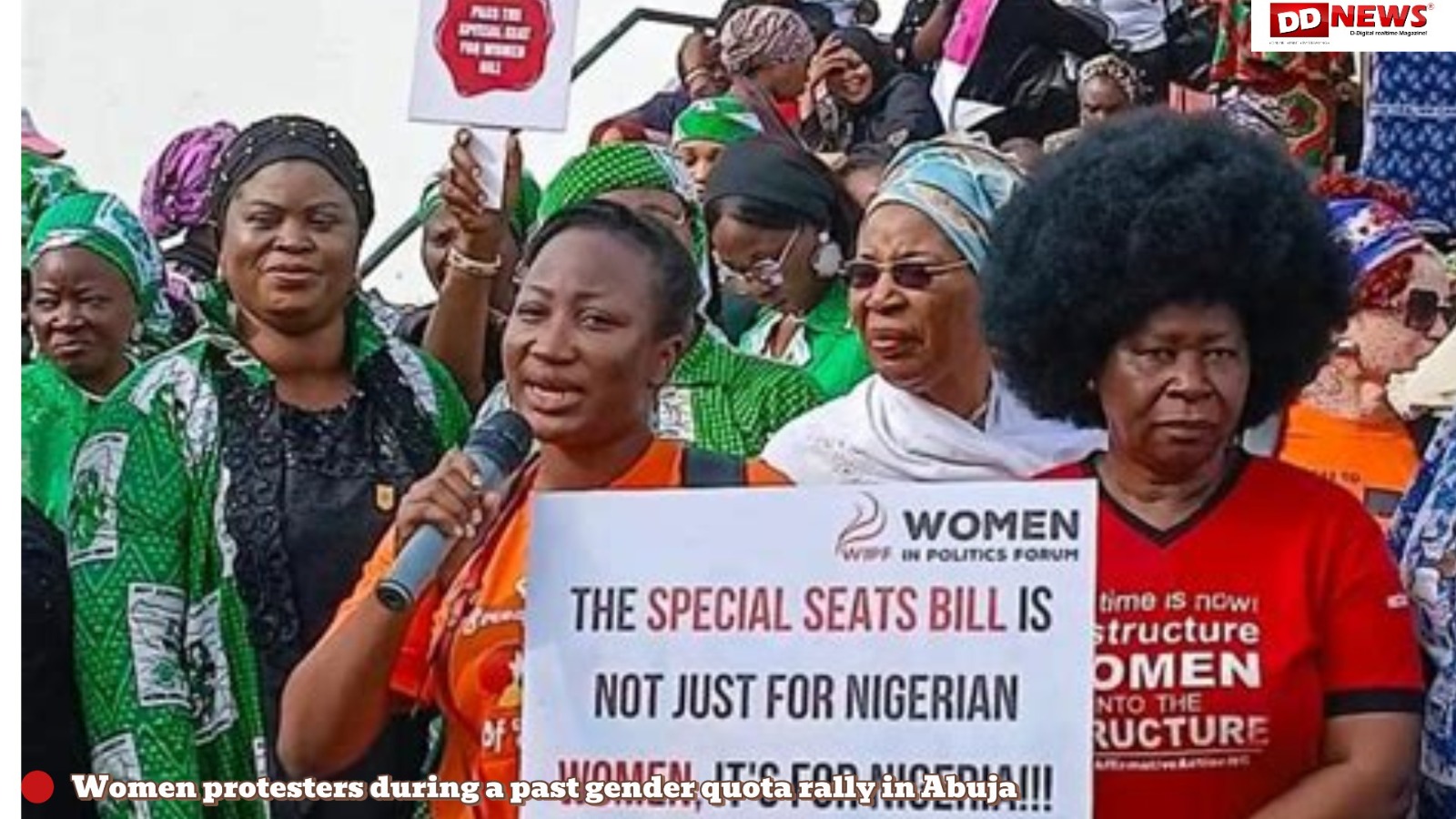
As Nigeria approaches the 2027 general elections, women continue to face systemic exclusion from legislative power, with 13 states currently operating all-male Houses of Assembly and long-promised gender quota reforms remaining stalled at both federal and state levels.
A new analysis by gender advocacy groups and civil society organisations, released on Wednesday, January 22, 2026, shows that women hold only 4.47% of seats in state Houses of Assembly nationwide (just 28 out of 991 seats), and 6.7% in the National Assembly (13 out of 469 seats). Thirteen states—Adamawa, Bauchi, Bayelsa, Borno, Gombe, Jigawa, Kano, Katsina, Kebbi, Sokoto, Taraba, Yobe, and Zamfara—have zero female representation in their state assemblies.
The report, titled “Women and Power 2027: A Call to End Exclusion,” highlights:
No state has achieved the 35% affirmative action benchmark recommended by the National Gender Policy and the Beijing Platform for Action.
The Gender and Equal Opportunities Bill, which seeks 35% quota for women in appointive and elective positions, has been stuck in the National Assembly since 2016—rejected multiple times or diluted beyond recognition.
In the 2023 elections, women won only 3 Senate seats and 10 House of Representatives seats out of 109 and 360 respectively.
Several states still lack enabling laws for independent candidacy or party primaries that would favour female aspirants.
Advocates say the situation is worsening ahead of 2027 due to:
High cost of political participation (nomination forms often cost ₦20–50 million).
Violence and intimidation against female candidates.
Patriarchal party structures that marginalise women during primaries.
Lack of political will to pass quota legislation.
Voices from the Ground
Dr. Abiola Akiyode-Afolabi (Women Advocates Research and Documentation Centre): “Thirteen all-male assemblies in 2026 is a national shame. We are regressing while the rest of the world advances. Without quotas and legal reforms, 2027 will be another cycle of exclusion.”
Hauwa Shekarau (former Minister of Women Affairs): “Women are over 50% of voters but less than 7% of lawmakers. This is not democracy—it is male domination dressed as politics.”
Young female aspirant (anonymous): “I wanted to run for my state assembly, but the party told me ‘wait for your turn.’ When will that turn come?”

Subscribe To The Best Team In Conservative, Business, Technology, Lifestyle And Digital News Realtime! support@ddnewsonline.com
The Federal Government has promised to revive the Gender Bill, but critics say repeated failures show lack of genuine commitment.
With less than 18 months to the 2027 polls, civil society groups are intensifying campaigns for mandatory 35% quotas, party reforms, and zero-tolerance for gender-based violence in politics.
By Ogungbayi Beedee Adeyemi
Send tips to: adeyemi@ddnewsonline.com | 08168555497
Backbiome is an advanced daily wellness supplement formulated to help support spinal comfort, reduce feelings of built-up tension, and promote freer, smoother movement throughout backbiome everyday life.