
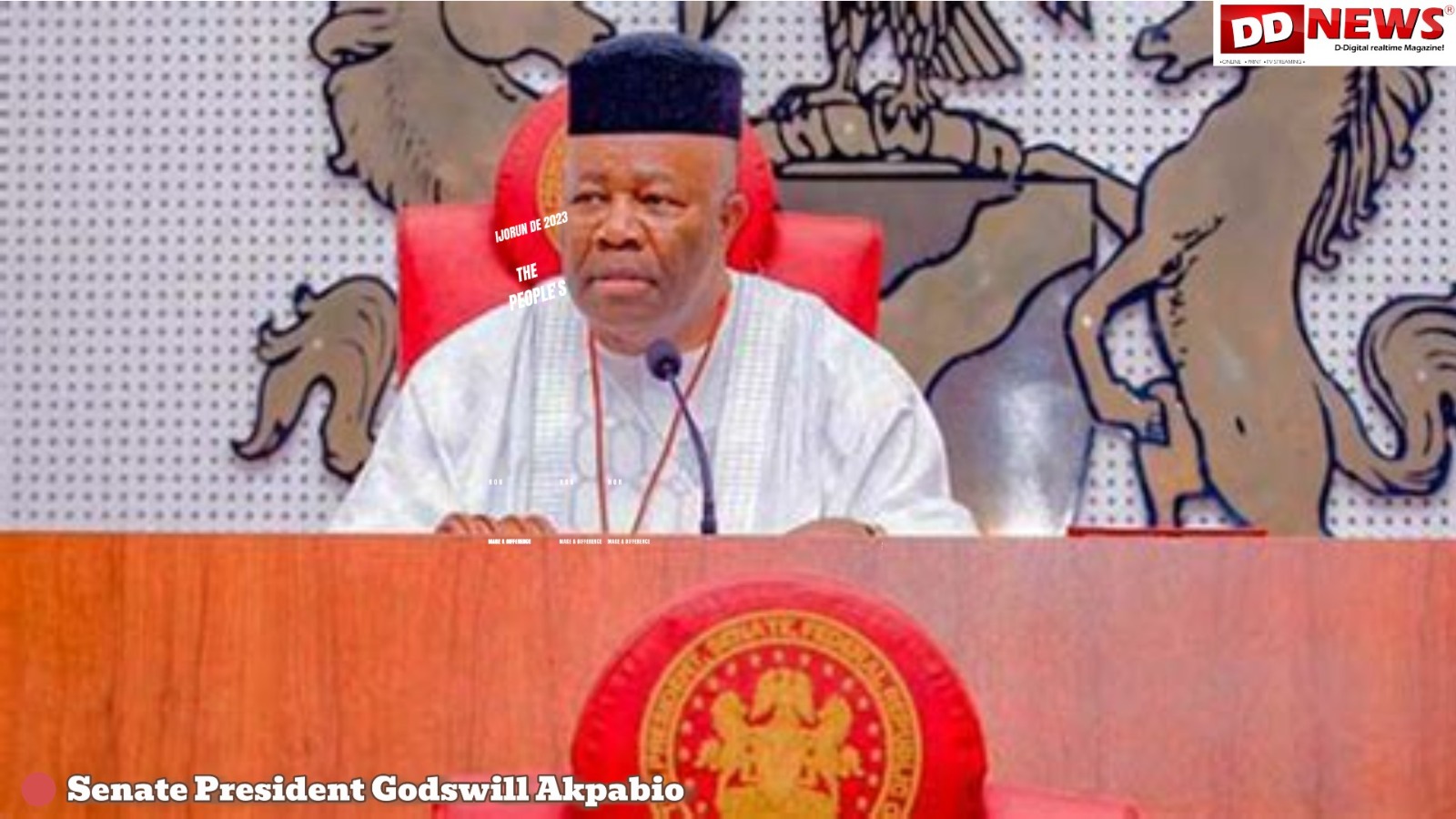
Senate President Godswill Akpabio has defended the newly signed Electoral Act 2022 (Repeal and Re-enactment) Amendment Act 2026, insisting that the legislation represents the genuine will of the majority of Nigerians rather than being shaped solely by the demands of vocal critics and protesters.
Speaking to journalists after President Bola Ahmed Tinubu assented to the bill on Wednesday, February 18, 2026, Akpabio described the amendment as a “major milestone in strengthening Nigeria’s democracy” and a product of extensive legislative scrutiny, public hearings and inter-chamber harmonisation.
Akpabio’s Statement“This is not a bill written for the few who shouted the loudest at the gates or on social media. It is a law written for the silent majority of Nigerians who want to vote and have their votes count without fear of manipulation or cancellation.”
“We listened to everyone, civil society, political parties, INEC, security agencies, traditional rulers, youths and ordinary citizens during public hearings. The final product reflects broad consensus, not the narrow view of any single group.”
“The amendment introduces stronger transparency and security measures: mandatory electronic transmission as the primary mode, clear fallback procedures only in verifiable technical failure, stricter penalties for result mutilation, better protection for INEC officials and enhanced voter verification through BVAS.”
Akpabio acknowledged the intense public protests (including the ongoing #MattressRevolution sit-in at the National Assembly gates) but maintained that the Senate and House made adjustments based on “evidence-based input” rather than street pressure alone.

Subscribe To The Best Team In Conservative, Business, Technology, Lifestyle And Digital News Realtime! support@ddnewsonline.com
He added: “Every vote must count, that is the bottom line. The law now makes it harder for anyone to hijack results at collation centres. We have balanced technology with practicality, so elections remain credible even if there is a network glitch. This is progress, not perfection.”
Reactions: Protesters & Civil Society: Groups like Yiaga Africa, Enough is Enough Nigeria and Take-It-Back Movement described the signed version as “still disappointing,” insisting the fallback clause for manual transmission remains a “loophole for rigging” and have vowed to continue their sit-in.
Opposition Parties (PDP, LP): Criticised the President’s assent as “hasty” and accused the ruling APC of pushing through a weakened bill to maintain advantage in 2027.
INEC: Welcomed the assent and said it will immediately begin aligning its processes, training and procurement plans with the new provisions ahead of the 2027 elections.
The Electoral Act 2026 amendment is now law and will govern the conduct of the 2027 general elections (Presidential & National Assembly: February 20, 2027; Governorship & State Assembly: March 6, 2027), subject to any future constitutional or judicial challenge.
By Ogungbayi Beedee Adeyemi
Send tips to: adeyemi@ddnewsonline.com | 08168555497
So, I tried plus777asia1 looks like the Asia version. If youre located somewhere near the Asia side, check this game out. But play responsibly yeah fam! Lets check it out now plus777asia1
Montezuma777 is a blast from the past – retro vibes are strong with this one! Its simplistic setup keeps me coming back for more. Definitely enjoyable. Check it out! montezuma777
3450kplataforma seems to be a good option for playing online games. While I haven’t played there much, its fast navigation makes it quite good overall for those who just wanna get straight to it! You’ll definitely enjoy it. 3450kplataforma
Backbiome is an advanced daily wellness supplement formulated to help support spinal comfort, reduce feelings of built-up tension, and promote freer, smoother movement throughout backbiome everyday life.