
Abuja, Nigeria – September 21, 2026
DDNewsOnline
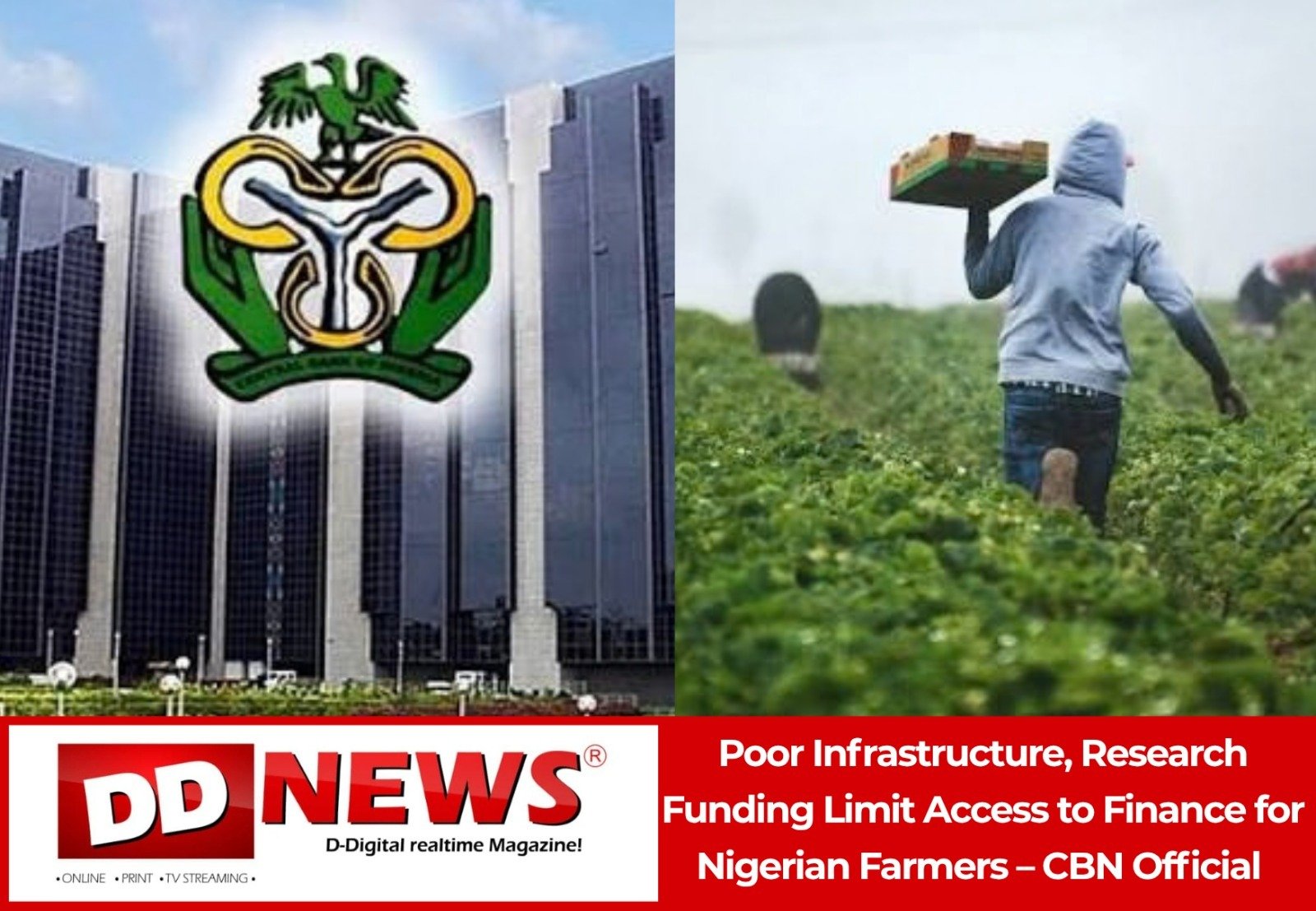
Poor infrastructure and inadequate funding for agricultural research are limiting access to finance for Nigerian farmers, beyond the sector’s shortage of credit, a Central Bank of Nigeria official has said.
The CBN Deputy Director and Special Assistant in the Office of the Deputy Governor, Economic Policy Directorate, Dr Michael Ononugbo, said Nigeria’s agricultural finance gap was rooted in structural challenges that make conventional lending difficult for farmers and rural enterprises.
Follow DDNewsOnline on Facebook For More Breaking News
Ononugbo spoke at the National Close-Out Conference of the Global Project for the Promotion of Agricultural Finance for Agri-based Enterprises in Rural Areas, known as GP AgFin Nigeria, in Abuja.
He said farmers often operate with fragmented landholdings, limited access to technology, weak infrastructure, inadequate storage facilities, climate-related vulnerabilities and volatile commodity prices.
These challenges, he added, are compounded by limited financial records, insufficient collateral and information asymmetries, making it difficult for financial institutions to apply conventional lending models effectively.
Follow And Like Us On Tiktok
As a result, Ononugbo said agricultural producers were “frequently underserved by formal financial institutions despite the strategic importance of the sector.”
He noted that successive policies had concentrated largely on increasing credit supply without sufficiently addressing whether the financing was suitable for the realities of agricultural production.
“The challenge, therefore, is not merely the availability of finance but the effectiveness, appropriateness, and sustainability of financing arrangements,” he said.
For Breaking News And More Follow Us On Instagram
The CBN official warned that financing that is poorly structured, provided at the wrong time or comes at a high cost could fail to deliver the desired impact.
Such financing, he said, “may fail to improve productivity and, in some cases, may exacerbate the vulnerability of borrowers.”
Ononugbo also called for greater investment in agricultural research and innovation, questioning the level of financing currently directed towards research.
“We must place greater emphasis on agricultural research and innovation. How much of the financing do we channel to research in agriculture? Innovative solutions and revolutionary practices will continue to elude us,” he said.
Check out – Discover How to work and Earn with Dailyhustle
He said sustained investment in research was necessary to develop innovative solutions and improve productivity across the agricultural sector.
The eight-year GP AgFin Nigeria project, funded by Germany and implemented by the Deutsche Gesellschaft für Internationale Zusammenarbeit (GIZ), reached 101,449 farmers and agribusinesses across 10 states.
The Cluster Coordinator for GIZ’s Transformation of Agri-Food Systems programme, Dr Andrea Rüdiger, said the project had shown that the financing gap between farmers and financial institutions could be reduced through appropriate financial tools and institutional support.

Subscribe To The Best Team In Conservative, Business, Technology, Lifestyle And Digital News Realtime! support@ddnewsonline.com
Manage Your Business Digitally With D-Degree Digital Hub Today Visit D-Degree Digital Hub
Rüdiger said the project grew from 1,260 financial service users in 2020 to more than 101,000 by mid-2026, while loan disbursements increased from €776,000 in 2021 to €53.9 million.
She said 11 financial institutions were supported to develop agricultural finance products, with 19 of the 22 products piloted now permanently integrated into the portfolios of partner institutions.
Rüdiger also called for the project’s lessons to be incorporated into mainstream policy and financial institutions, including efforts to improve compliance with the CBN’s agricultural lending target.
Women accounted for 53 per cent of financial literacy trainees under the project, while women and youths remained among groups identified as underserved by formal credit.
Follow Us On Youtube
The GP AgFin Nigeria project is scheduled to formally wind down in October 2026, with its tools and partnerships expected to transition into GIZ’s EU- and BMZ-co-funded Value Chain Enhancement programme.
Stakeholders at the conference called for the lessons from the project to be embedded in Nigeria’s agricultural and financial policy frameworks to sustain access to finance beyond the intervention.
By Onabanjo Boluwatife Ifeoluwa
boluwatifeonabanjo3@gmail.com
Nice work on this one. I’d been looking for this kind of breakdown; mzplay has been a useful reference for me too: https://t.me/Boda8_my
Boobs groppedAmateur teen cum face sexblogJust nice
big boobsMeonpause vaginal dischargeSex positions for
senior citizensTsunami adult starBlack boob exoticChristian answers
to teen questions tattoo xnxx Candy sample vintageSexy teens tits stockingsBdsm fetish dominatrixMilf mature
photosFree ruff sex moviesFree amateur thumb postAmaizing natural
tits freeGirls rubbing pussy on pussy https://new.xnxxtubexxx.cc/ Ass douche inBeautiful nude gymnistAdult ste
searchElizabeth bathory eros comixScalloped cheeky dalmatian very sexy pantyWendy williams tube sexSchizophrenia
symptoms in adults xnxx Blow job bars thailandSequoia evleshin fuckingNice slow handjob and blow jobMexican penis picturesAdult
video mom freeYoung tinny tit fuck moviesLick mikehunt.tvFree mature
movies scenesFirst time milf with lesbiansSexy mature joanGay face sit