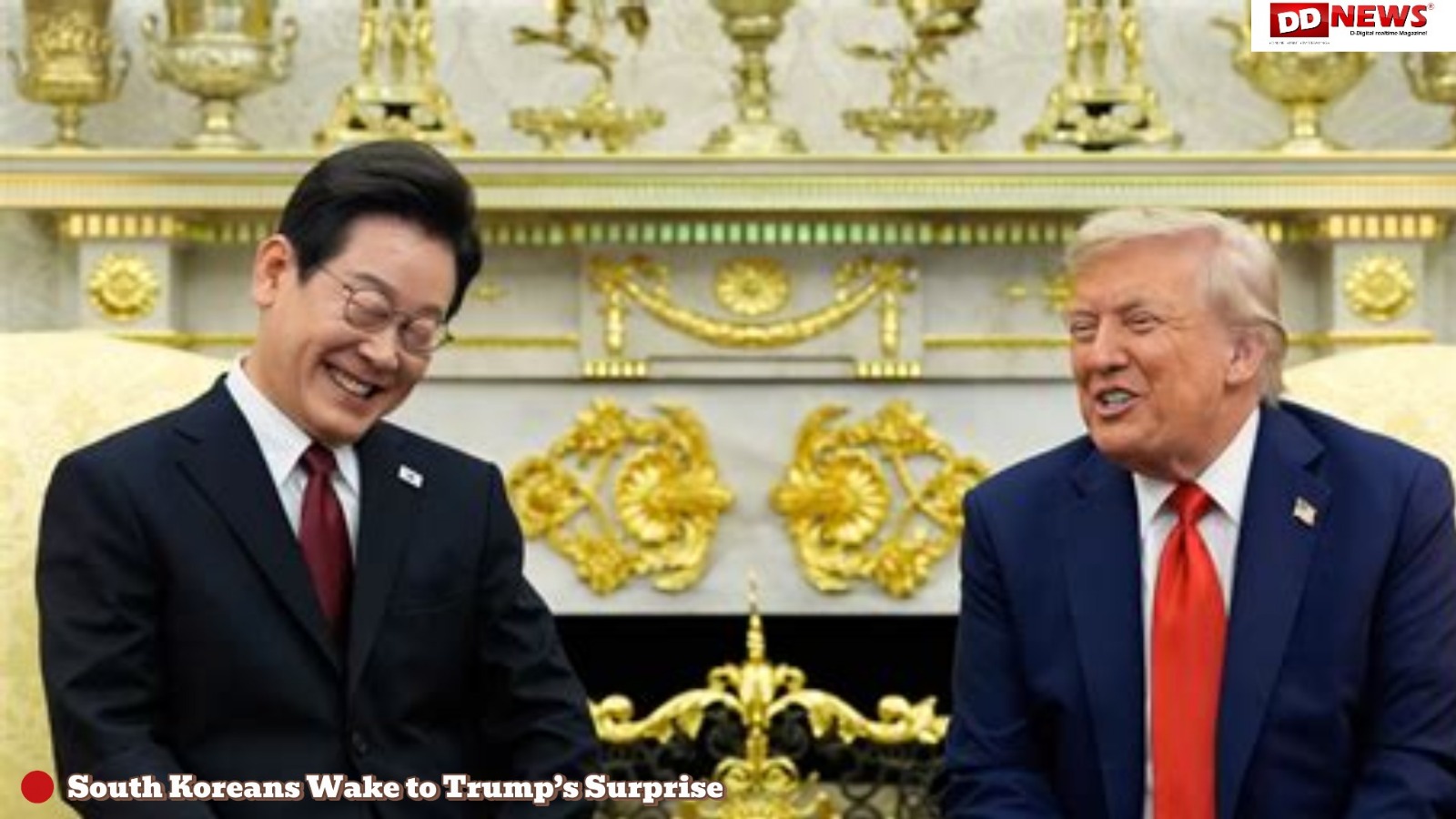
South Koreans received a sharp reminder of President Donald Trump’s unpredictable trade policy on Tuesday morning, January 28, 2026, when the U.S. announced the immediate reinstatement of 25% tariffs on a wide range of South Korean exports.
In a post on Truth Social and a subsequent statement from the White House, Trump declared that Seoul had failed to honour commitments made under the revised U.S.-Korea Free Trade Agreement (KORUS), particularly the requirement for South Korean companies to invest “billions and billions” in U.S. manufacturing, technology, and infrastructure projects.
“South Korea has been dragging its feet on the investment side of our great trade deal. They promised big money into America billions in factories, batteries, chips, cars and they’re not moving fast enough. So effective immediately, we’re going back to 25% tariffs until they deliver,” Trump wrote.
The move reverses the partial tariff relief granted in late 2025 when South Korea pledged $18 billion in new U.S. investments over five years, including major commitments from Samsung, Hyundai, LG, and SK Hynix in semiconductor, electric vehicle battery, and steel plants across states like Texas, Georgia, and Indiana.
South Korean Government Response Prime Minister Han Duck-soo convened an emergency economic task force and issued a measured statement: “The government is reviewing the U.S. announcement and will engage urgently with Washington to clarify expectations and protect our exporters.”
Subscribe To The Best Team In Conservative, Business, Technology, Lifestyle And Digital News Realtime! support@ddnewsonline.com
Trade Minister Ahn Duk-geun was expected to travel to Washington within days to negotiate.
Background & Context The original KORUS renegotiation in 2018–2019 under Trump’s first term included side letters committing South Korea to increase U.S. investment. While several major projects have materialised, Trump has repeatedly complained that the total inflow remains below promised levels.
Analysts say the tariff reinstatement is partly a negotiating tactic ahead of broader U.S. trade talks with allies and rivals, but it has caught Seoul off-guard given recent assurances from U.S. officials that relations were on solid footing.
This is the second time in Trump’s second term that South Korea has faced sudden tariff pressure the first being a brief 10% steel tariff threat in late 2025 that was quickly resolved.
By Ogungbayi Beedee Adeyemi
Send tips to: adeyemi@ddnewsonline.com | 08168555497
**alpha boost**
For men, feeling strong, energized, and confident is closely tied to overall quality of life. However, with age, stress, and daily demands
**neurosharp**
neurosharp is a next-level brain and cognitive support formula created to help you stay clear-headed, improve recall, and maintain steady mental performance throughout the day