

By Ogungbayi Adeyemi S. | adeyemi@ddnewsonline.com
Editor, DDNews |
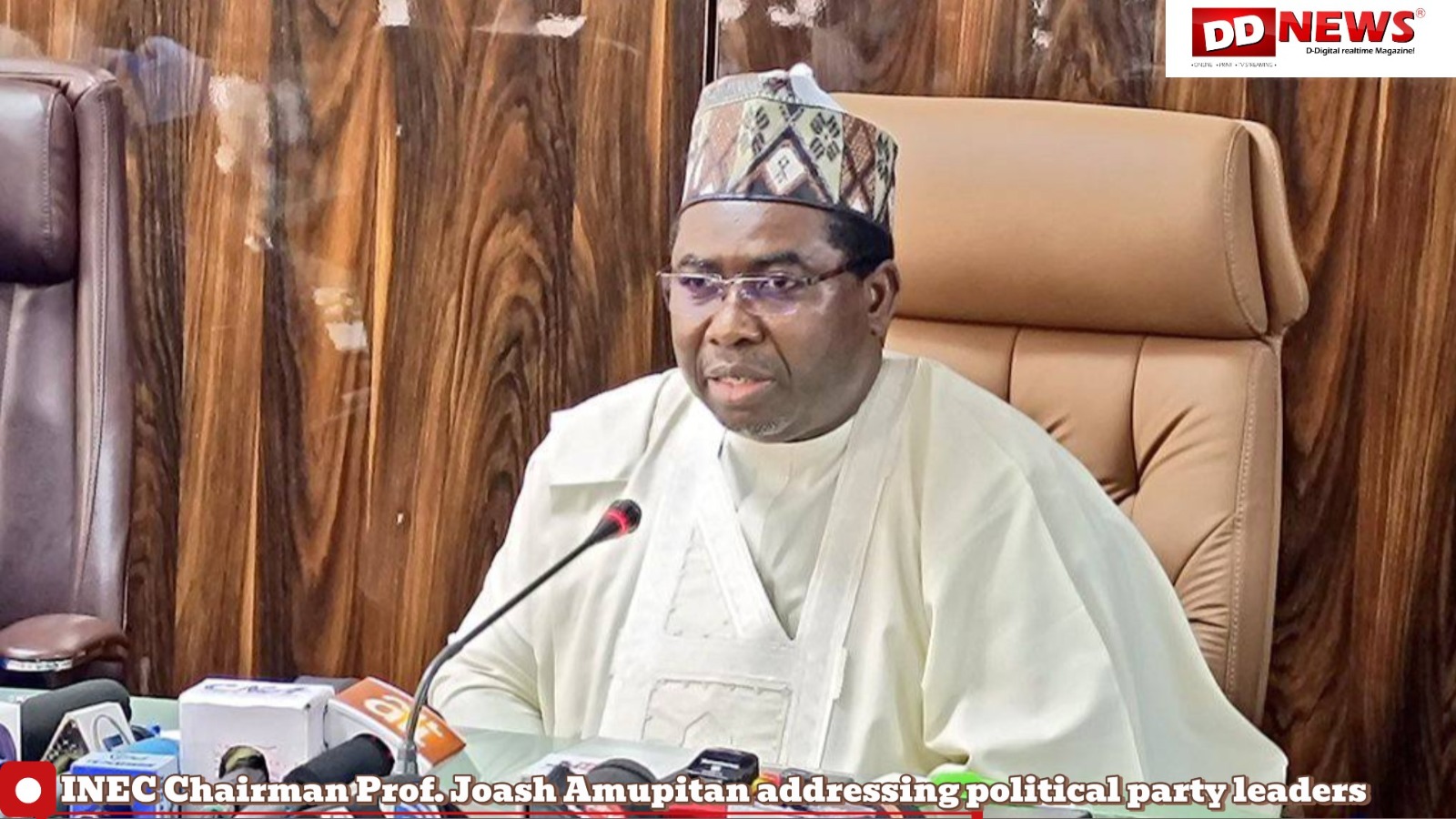
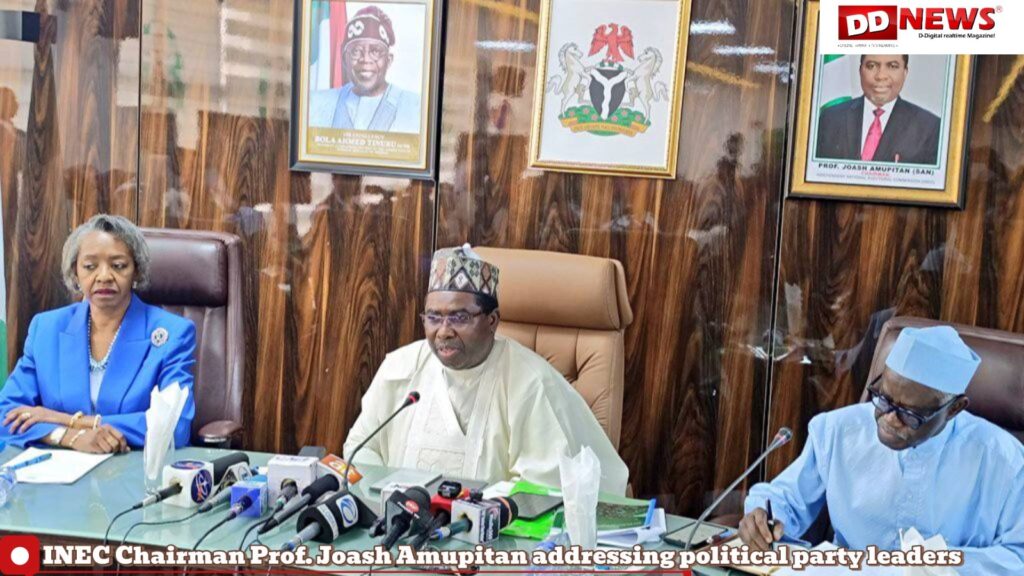
The Independent National Electoral Commission (INEC) on Monday, March 23, 2026, presented the draft INEC Regulations and Guidelines for Political Parties, 2026 to leaders of political parties at a consultative meeting in Abuja, seeking critical stakeholder input on the framework that will guide party operations in the forthcoming electoral cycle.
In his opening remarks, INEC Chairman Prof. Joash Amupitan described the gathering as a convergence of “joint custodians of Nigeria’s democratic future,” stressing that the foundation of credible elections is laid well before polling day.
Follow DDNewsOnline on Facebook For More Breaking News
“We meet today not merely as regulators and political actors, but as joint custodians of Nigeria’s democratic future,” he said, noting that the Commission had earlier undertaken a rigorous technical retreat to review and reconstruct the 2022 Regulations and Guidelines. “Today, we share the outcome of that exercise with you.”
Prof. Amupitan explained that the draft document was developed pursuant to powers conferred on the Commission by the Constitution and the Electoral Act, 2026, representing a comprehensive overhaul of the 2022 framework to align with recent legal provisions.
Follow And Like Us On Tiktok
“We cannot navigate a 2027 horizon using a 2022 map,” he declared. Drawing attention to Section 93(2) of the Electoral Act, 2026, the INEC Chairman underscored the Commission’s mandate to determine election expenses for political parties in consultation with stakeholders. He specifically urged political parties to carefully examine Clause 40(4) and (5) of the draft, which address financial regulations relating to party primaries and election conduct.
With the Presidential and National Assembly elections scheduled for January 16, 2027, and Governorship and State Assembly elections slated for February 6, 2027, the Chairman noted that the Commission is operating within a compressed timeline. He emphasized that the reduction in statutory timelines demands what he described as “surgical precision” in planning and execution.
For Breaking News And More Follow Us On Instagram
The draft Regulations and Guidelines cover key areas of party administration, including registration and mergers, internal party operations, conduct of primaries, campaign activities, political finance, and deregistration procedures. Notably, the framework also incorporates measurable benchmarks to enhance the participation of women, youth, and Persons with Disabilities (PWDs) in the electoral process.
IPAC Response In his response, Inter-Party Advisory Council (IPAC) National Chairman Dr. Dantalle commended the Commission for initiating a consultative process, describing it as essential for producing a workable regulatory framework that reflects operational realities.
Check out – Discover How to work and Earn with Dailyhustle
He noted that political parties are committed to engaging constructively with the draft, while highlighting areas requiring further clarification. Chief among these was the need for flexibility in the conduct of party primaries, which he described as an internal affair of political parties that should be accommodated within the regulatory provisions.
On membership registration, the IPAC Chairman drew attention to the practical challenges parties face in compiling comprehensive registers within stipulated timelines, urging the Commission to adopt provisions that balance inclusivity with accountability.

Subscribe To The Best Team In Conservative, Business, Technology, Lifestyle And Digital News Realtime! support@ddnewsonline.com
Manage Your Business Digitally With D-Degree Digital Hub Today Visit D-Degree Digital Hub
He also stressed the importance of transparency in result management, expressing support for technological innovations introduced by the Commission, while calling for clear and unambiguous provisions on the electronic transmission of results.
Dr. Dantalle further reiterated IPAC’s longstanding advocacy for the establishment of an Electoral Offences Commission to strengthen enforcement against vote buying and other electoral malpractices, suggesting that the Regulations could reinforce accountability mechanisms in the interim.
Follow Us On Youtube
In his closing remarks, Prof. Amupitan expressed appreciation to party leaders for their robust contributions, assuring stakeholders that all submissions would be carefully reviewed before the finalisation of the document.
“This is precisely why we convened this meeting,” he said. “Your insights and experiences are invaluable in shaping a regulatory framework that works for all stakeholders. The INEC Regulations and Guidelines for Political Parties will be stronger for having undergone this rigorous consultative process.”
Share Your Opinion With Us @ddnewsonline
The Commission is expected to integrate feedback from the consultative engagement into the final version of the INEC Regulations and Guidelines for Political Parties, 2026, which will be officially released ahead of the 2027 General Elections.
DDNewsOnline – Lagos
By Ogungbayi Adeyemi S. (Beedee)
Send tips to: adeyemi@ddnewsonline.com
09164987165 / 08168555497
© 2026 DDNewsOnline