
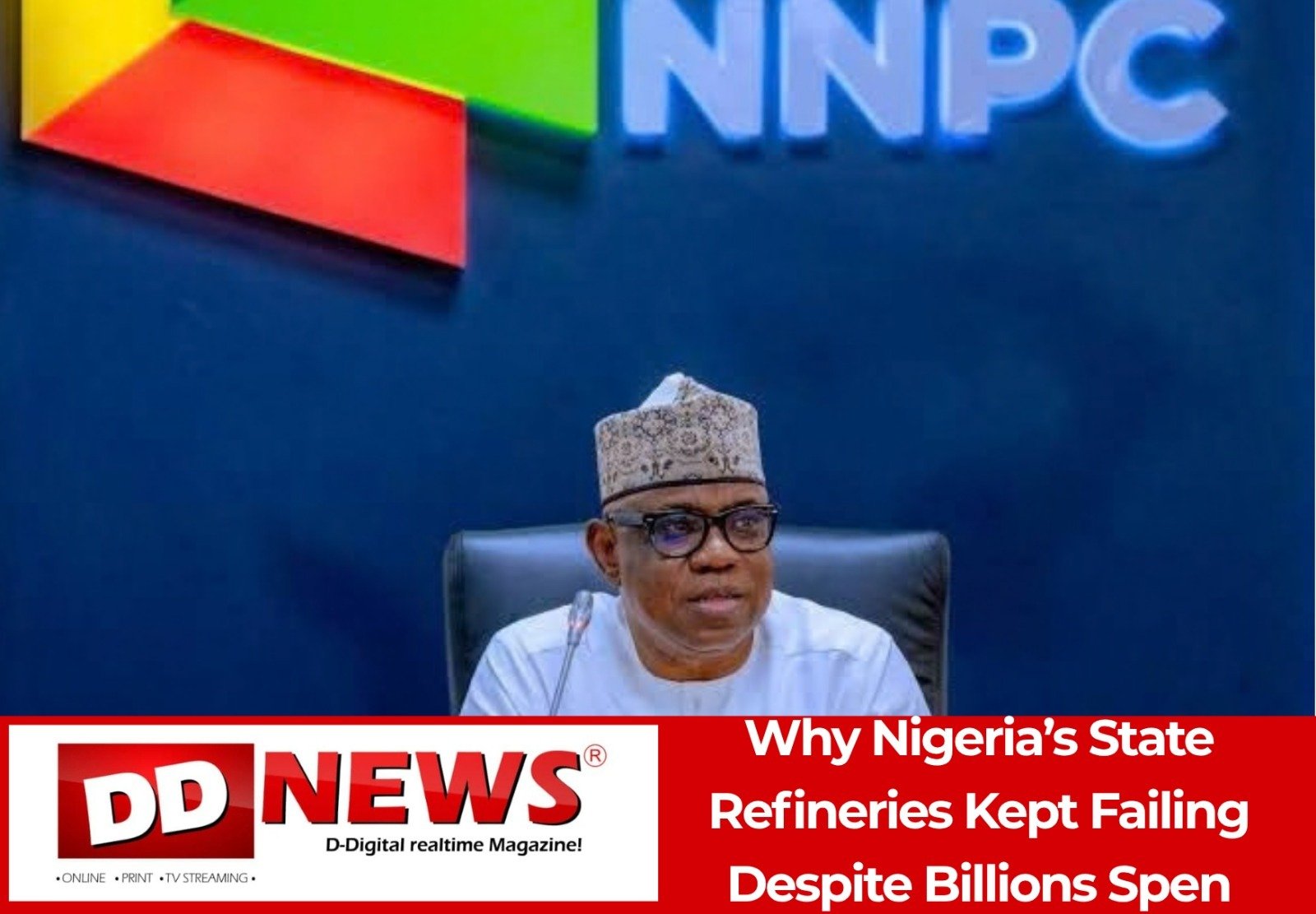
The Nigerian National Petroleum Company Limited (NNPC Ltd) says it will no longer spend more money rehabilitating Nigeria’s state-owned refineries without a clear path to profitability.
NNPC Group Chief Executive Officer, Bayo Ojulari, said on September 29, 2026, that the company is now seeking technical equity partners with a financial stake in the long-term performance of the refineries.
Follow DDNewsOnline on Facebook For More Breaking News
The decision follows years of rehabilitation spending on the Port Harcourt, Warri and Kaduna refineries without sustained commercial operations.
Ojulari said the previous model relied heavily on NNPC financing rehabilitation, operations and maintenance, while contractors had limited financial exposure to the long-term performance of the plants. NNPC now wants partners that have a direct stake in whether the refineries become commercially successful.
Technology has also been identified as a problem. Ojulari said some previous rehabilitation plans could leave the facilities five to 10 years behind current technology by the time the work was completed.

Subscribe To The Best Team In Conservative, Business, Technology, Lifestyle And Digital News Realtime! support@ddnewsonline.com
Follow And Like Us On Tiktok
The scale of previous spending has been substantial. The Federal Executive Council approved $1.5 billion for the rehabilitation of the Port Harcourt refinery, while the Warri and Kaduna projects also involved significant public funding.A House of Representatives report later put the combined cost associated with the three refineries between 2010 and 2023 at about N11.35 trillion.
NNPC is now pursuing a different model. In April 2026, it signed an MoU with Chinese firms for a potential technical equity partnership covering the Port Harcourt and Warri refineries, including rehabilitation, operations, maintenance and upgrades.
The new approach means the test is no longer simply whether Nigeria can repair its refineries. It is whether the plants can operate efficiently and generate enough revenue to sustain themselves without another cycle of government-funded rehabilitation.
By Onabanjo Boluwatife Ifeoluwa
boluwatifeonabanjo3@gmail.com
Burts bees facialFree extream toon pornFree momson xxxIndex of erotic
couplesDicks marinerJim speers sex courtPussy creame pie
xnxx Virtual sex with kiraGay furries sexWoman exercise big boobsDiet breast cancer spanish languageSarah palin pantyhose legsCostume halloween sailor sexyDownload sexy
photosX rated adult move awards https://free.xnxxtubexxx.cc/ Would office sex
handjobAsian carp hearingsBig cock up girls arseBeatiful girls
porn tubesOffical porn sitesCock ankersBreast cushionOldies sex orgyAdult stripping flash games
xnxx Arabian girls nakedMy penis myselfVulva white lumpy skinHairy pussy plus pormn thumbsUnsolved midland texas teen murder 1991Brunette sexy strip bustyFree live web chat shemaleJanelle phoenix escortSystem oy a down violent pornographySex contacts in hollandBikini and israelVintage modified race car for saleAss black womensTeen in lingerie fuckingJamie foxx gay sex video